
If you’ve ever used Dial soap, eaten at a Greyhound rest stop, or heard of Viad Corp, you’ve already touched the world John Teets built. Most people have never heard his name. Yet this one man reshaped some of the biggest companies in Corporate America — turning a struggling bus and meatpacking conglomerate into a lean, profitable empire that touched the lives of millions of Americans every single day. John Teets Net Worth 2026 is still a topic people search because his story isn’t just about money. It’s about what happens when one person with drive, grit, and uncommon vision takes the wheel of a sinking ship and steers it straight into history.
John Teets Quick Bio
John Teets was a giant of corporate leadership in the truest sense. He didn’t inherit his success — he built it brick by brick, starting from a working-class neighborhood in Chicago and climbing all the way to the top of one of America’s most recognized Fortune 500 corporations. His life is one of the most compelling business success stories in American history.
| Detail | Information |
| Full Name | John W. Teets |
| Born | September 15, 1933, Chicago, Illinois |
| Passed Away | August 5, 2011 |
| Nationality | American |
| Known For | CEO of Greyhound Corporation, Dial Corporation, Viad Corp |
| Net Worth (Peak Estimate) | $40 million – $50 million |
| Career Span | 1963 – Late 1990s |
| Headquarters | Phoenix, Arizona |
| Industry | Transportation industry, Consumer Products Industry, Financial Services |
| Education | Business-focused academic background, Chicago |
Even a quick glance at that table tells you something important: this was a man who spent decades at the very top of American industry. His John Teets fortune didn’t come from a single lucky break. It came from decades of tough decisions, bold restructuring moves, and an unwavering belief in the power of focused business transformation.
Who Was John Teets?
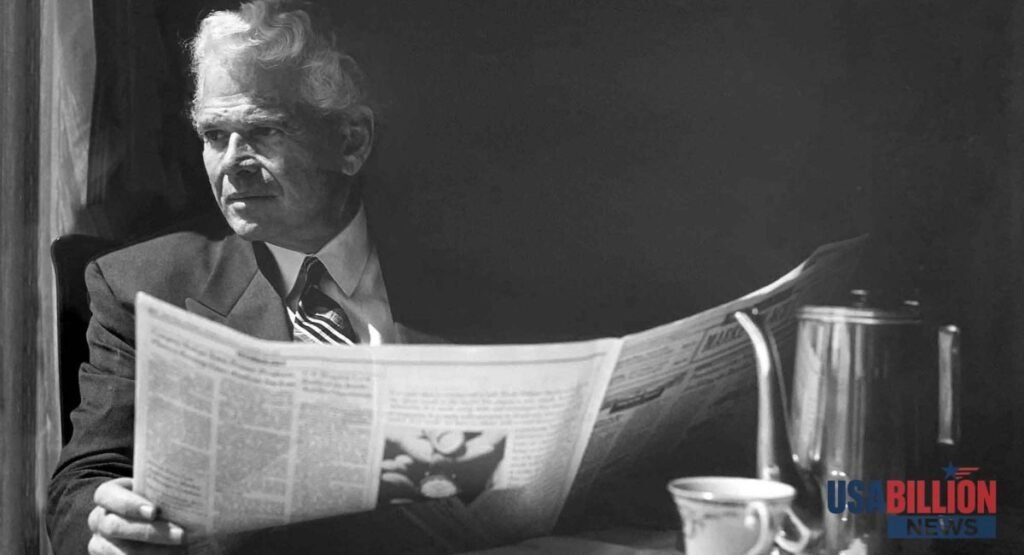
You might not know his name the way you know Lee Iacocca or Jack Welch, but John Teets was every bit their equal when it came to reshaping a massive American corporation under fire. He was an American businessman who served as the CEO of Greyhound Corporation starting in 1981 — a role he took on when the company was widely mocked on Wall Street as “the dog.” The name wasn’t kind. But Teets turned the dog into a thoroughbred.
John Teets was fundamentally a builder. He saw what others dismissed. Where analysts saw an unfocused mess of bus lines, meatpacking plants, soap brands, and food service divisions, Teets saw the raw material for something powerful. He believed in the discipline of strategic business decisions — cutting what didn’t work, strengthening what did, and transforming an entire corporate identity from the inside out. His John Teets biography is the story of a man who made Corporate America better by refusing to accept mediocrity. By the time he stepped back from the executive chair in the late 1990s, he had overseen the creation of not one but two separate, publicly traded companies — the Dial Corporation and Viad Corp — each a market leader in its own right. That’s a legacy very few executives in American history can claim.
Early Life, Family Background and Education
Chicago shaped John Teets in ways that no business school ever could. Teets grew up in Chicago in a blue-collar home, the son of a crane operator who later started his own construction company. That background gave him something money can’t buy — a genuine understanding of work, of what it means to build something from nothing, and of the cost of failure. Growing up without the safety net of wealth forces a certain kind of clarity, and Teets carried that clarity with him for the rest of his life.
Born in Chicago, Illinois, Teets was raised in a working-class family and demonstrated entrepreneurial spirit from a young age, selling newspapers and working various jobs to support his family. Those early jobs weren’t just about making ends meet — they were his first classroom in business. He learned how to engage customers, manage time, and spot what people actually needed. That instinct for practical, results-driven thinking would define his entire career. His John Teets career didn’t start in a corner office. It started on street corners, in diners, and in the kind of places where real work gets done. From his formative years, Teets understood the importance of education, excelling academically in local schools and laying the foundation for his future business endeavors. With a keen interest in business studies, he pursued higher education in college, where he developed a deep understanding of the corporate world. Those humble beginnings gave him what many polished Ivy League executives lacked: street smarts paired with business intelligence.
How John Teets Started His Career
Before John Teets ever set foot inside a Fortune 500 boardroom, he was already proving himself as an entrepreneur. John began his illustrious business career as an entrepreneur. By age 29, he was a partner in an entertainment complex in suburban Chicago, which housed 16 shops, an ice-skating rink, and a 300-seat restaurant. Think about that for a moment. At 29, most young professionals are still figuring out their first career moves. Teets was already running a multi-unit entertainment business that required managing staff, dealing with vendors, handling finances, and delivering real customer experiences every single day. That entrepreneurial background wasn’t a footnote in his career — it was the foundation.
This entrepreneurial background launched his success in the corporate world. John Teets joined the Greyhound Corporation in 1963 to help develop the restaurants at Greyhound’s Post House subsidiary at the New York World’s Fair. It was a specific, skill-matched role. Greyhound needed someone who understood food service at scale, and Teets was exactly that person. He wasn’t parachuted in as a high-flying MBA. He came in through a side door, carrying real-world experience that proved its worth almost immediately. His career beginnings were practical, grounded, and already pointed upward. This is a critical lesson in the John Teets biography — he didn’t wait for a perfect opportunity to arrive. He took a practical role, delivered excellent results, and let his performance do the talking.
Rise at Greyhound Corporation
Once inside Greyhound Corporation, John Teets moved with remarkable speed through the ranks. In 1965, at age 32, he became president of two food service subsidiaries, Post House and Horne’s Enterprises, the youngest subsidiary chief operation officer in Greyhound history. The youngest. That title wasn’t given — it was earned through consistent delivery and a demonstrated ability to grow revenue in competitive conditions. His food service expertise drove remarkable growth. During that time, the food service group grew 60 percent over the next four years. A 60 percent growth rate in four years is extraordinary by any standard. It proved beyond any doubt that Teets wasn’t just a competent manager — he was a transformational force.
He eventually went on to become president and chief executive officer of Greyhound Food Management and group vice president of food service for the Greyhound Corporation in 1975. He was assigned added duties as group vice president of services in 1980 to oversee units involved in aircraft ground services, cruise ship gift shops, airport duty-free shops and their service businesses. John was elected vice chairman of the Greyhound Corporation and to the board of directors in 1980. He was soon named chairman and CEO of Armour & Company, then a Greyhound subsidiary. In October 1981, John became CEO of the Greyhound Corporation and was elected chairman of the board in 1982. From a food service executive at the World’s Fair to Chairman and CEO of a Fortune 500 company in under two decades — that is the arc of a true business leader and a masterclass in corporate management.
| Year | Role | Milestone |
| 1963 | Joined Greyhound | World’s Fair food service development |
| 1965 | President, Post House & Horne’s | Youngest subsidiary COO in Greyhound history |
| 1975 | CEO, Greyhound Food Management | Food division grew 60% in 4 years |
| 1980 | Group VP of Services, Vice Chairman | Oversaw aviation, cruise, duty-free units |
| 1981 | CEO of Greyhound Corporation | Named top executive of Fortune 500 company |
| 1982 | Elected Chairman of the Board | Full executive control of entire corporation |
Transforming Greyhound During a Corporate Crisis
When John Teets stepped into the top job at Greyhound Corporation, he inherited a sprawling, unfocused conglomerate that Wall Street had nicknamed “the dog.” The company had bus lines, meatpacking plants, soap brands, restaurant chains, and financial services all jumbled together under one roof. Analysts hated it. Investors were skeptical. The stock was underperforming. And Teets walked in and immediately started making tough calls. Upon becoming CEO, Teets immediately began to sell subsidiaries that were not performing well. The meatpacking division, which was earning $10 million on sales of $2 billion, was among the first to be sold. Teets blamed higher than average employee wages for Armour’s difficulties; when the unions refused to accept a reduction in pay, Teets closed all 29 meat-packing plants in one day. That decision was swift, decisive, and controversial — but it was the kind of bold strategic leadership that defined his entire career.
The most dramatic test of his corporate turnaround leadership came quickly. Teets’ handling of the violent 47-day bus driver’s strike was no different. This strike was precipitated by management’s demand that the drivers accept a 17 percent cut in wages and benefits. After a bitter series of negotiation meetings, the drivers were forced to swallow a 15 percent wage reduction. Greyhound had won a major concession, but the price was costly — $25 million in lost revenues. It was a brutal moment, and it drew significant public attention and criticism. But Teets understood what many critics didn’t: without cost control, the entire corporation was headed toward collapse. His corporate turnaround expert credentials were being forged in real time, under enormous pressure. Meanwhile, he was making smart acquisitions to build up the consumer products side of the business. In 1986 the consumer products division acquired Ellio’s Pizza and Purex Corp., maker of soap, bleach, and other household products that filled in gaps in Greyhound’s product lines. A year later Greyhound acquired Carson Pirie Scott & Co.’s in-flight catering and airport terminal concession business. The 20 Mule Team division of United States Borax & Chemical Corp. and its household products were brought into the fold in 1988. The addition of Republic Money Orders added to the financial services area. In 1990 Greyhound acquired the Breck hair care products business. Every one of those acquisitions was a deliberate piece of a bigger puzzle — a business transformation strategy that Teets was executing with surgical precision. By the late 1980s, what had been a struggling, unfocused conglomerate was becoming a leaner, more profitable powerhouse.
The Creation of Dial Corporation and Viad Corp
The final and most lasting act of John Teets’ corporate legacy was also his most brilliant. Early in 1987, they sold the Greyhound bus company to a group of investors from Dallas. In March 1987 a Dallas-based investment group led by Fred G. Currey purchased the struggling bus line from Greyhound Corporation through a $350 million leveraged buyout (LBO). With the bus line gone, Teets now had a cleaner canvas to work with. He renamed the remaining entity Greyhound Dial in 1990, and then simply The Dial Corp in 1991, to fully separate its identity from the sold-off bus operations. But he wasn’t done yet. He had one more restructuring move planned — and it would be his masterpiece. In early 1996, John completed the final piece of his strategic restructuring plan for the company. Dial was divided into two independent, publicly traded entities. One was comprised of its well-known $1.6 billion consumer products business, the Dial Corporation, and the other its $2.5 billion service business, the Viad Corp.
Think about that split for a moment. Teets took what was once a messy, struggling conglomerate and divided it into two focused, profitable, publicly traded companies with a combined value of over $4 billion. That is extraordinary company restructuring at the highest level. Viad is made up of the service businesses of the former Dial and included convention service, airline catering, financial payment services, and travel and leisure businesses. And the Dial Corporation kept the consumer products side — brands like Dial soap, Purex, Breck, and Armour that were household names across America. The results spoke for themselves. From 1991 to 1995, Dial stock outperformed the S&P 500 by almost 50 percent. Dial researchers have also estimated that eight out of every ten U.S. homes contain at least one of the company’s products. At the time, Dial items were sold in 78 countries and were manufactured in 14 U.S. plants and one plant in Mexico. That’s not a turnaround story. That’s a total reinvention. And John Teets made it happen. His business growth strategies and relentless focus on financial success through disciplined corporate restructuring turned a sinking ship into two ocean liners.
John Teets Net Worth in 2026
Here’s what you actually came for — and it’s a fascinating, nuanced story. John Teets Net Worth 2026 is naturally a topic tied to both historical valuation and estate legacy, since Teets himself passed away in August 2011. But the financial picture he left behind tells the story of a life spent at the very top of executive compensation in Corporate America. Various sources place his peak net worth at different figures, and it’s worth being transparent about that. Estimated at approximately $40 million, his wealth stemmed primarily from his role as CEO of the Greyhound Corporation, later rebranded as The Dial Corporation. Under his leadership, the company underwent significant transformations, which not only boosted its profitability but also elevated Teets’ personal earnings through salary, bonuses, and stock options. Other estimates push that figure higher. John Teets Net Worth at the height of his career was estimated to be between $40 million and $50 million, a testament to his exceptional leadership and business acumen.
When we talk about John Teets Net Worth 2026, we’re really discussing the lasting financial legacy he built during a 35-year corporate career at the top of American industry. His wealth accumulation came through multiple streams — executive salaries, performance bonuses, stock options that rose dramatically as Dial Corporation stock outperformed the S&P 500 by nearly 50 percent, and personal investments made during his long tenure. Some sources suggest higher valuations reaching up to $100 million when accounting for investments, real estate, and asset appreciation over time. The honest answer is that the precise figure is difficult to pin down with certainty, as is common with private wealth at this level. What isn’t in dispute is that John Teets built enormous financial achievements across a decades-long career, and his John Teets wealth represents one of the most impressive examples of wealth growth through executive leadership in Corporate America’s modern era.
Net Worth Growth Timeline
Understanding John Teets fortune means understanding the phases of his financial life. Each decade brought a new level of wealth accumulation as his roles grew more significant and his impact on corporate performance became undeniable. His John Teets financial portfolio wasn’t built overnight. It was the product of decades of disciplined execution.
| Era | Role & Status | Wealth Stage | Key Driver |
| 1963–1964 | Entry-level Greyhound role | Early foundation | Salary + entrepreneurial savings |
| 1965–1974 | Youngest subsidiary COO, food service president | Building phase | Rapid salary growth, early stock exposure |
| 1975–1980 | CEO Greyhound Food Management, VP of Services | Accelerating growth | Executive pay, bonuses, division profits |
| 1981–1986 | CEO of Greyhound Corporation | Significant accumulation | CEO compensation, stock options, corporate bonuses |
| 1987–1995 | Chairman/CEO of Dial Corp | Peak accumulation | Dial stock outperforms S&P 500 by ~50%, major bonuses |
| 1996 | Split of Dial into Dial Corporation and Viad Corp | Wealth crystallization | Shares in both new public companies |
| 1997–2000s | Retirement phase | Wealth preservation | Investment returns, real estate, equity income |
| 2011 | Passing | Estate valuation | $40M–$50M+ estimated total |
| 2026 | Legacy/historical estimate | John Teets Net Worth 2026 | Estate, philanthropy, named legacy |
Each phase of this timeline reflects a deliberate pattern of financial success driven by strategic career positioning and consistent corporate performance. His wealth growth wasn’t accidental — it was the natural result of delivering extraordinary results at every level of his career.
Main Sources of Income
John Teets’ John Teets income sources were diverse, layered, and the product of a long career at the summit of executive compensation in America. He didn’t rely on a single income stream. Like all great business executives, he built wealth through multiple channels that reinforced each other over time.
Executive Compensation
As CEO of Greyhound Corporation and later Dial Corporation, John Teets received compensation packages typical of top Fortune 500 executives in the 1980s and 1990s — a period when executive salary structures were growing dramatically across Corporate America. His base salary as a Fortune 500 CEO would have been in the millions annually, supplemented by substantial performance bonuses tied to corporate results. As the top executive at Greyhound Corporation, Teets received a competitive compensation package. Like other Fortune 500 CEOs, his earnings included a base salary, yearly performance bonuses, and long-term stock-based incentives. This consistent income base allowed him to grow his assets steadily over the years. The performance bonuses alone would have been enormous given the scale of the turnaround he engineered. When you’re the architect of a corporate transformation that takes a struggling conglomerate and produces two market-leading publicly traded companies worth a combined $4+ billion, the bonus structure reflects that achievement. His executive pay during the peak years of the Dial transformation was almost certainly among the highest in the consumer products and services sector, and rightfully so given the shareholder value he delivered. Every year that Dial stock climbed — and it climbed dramatically — Teets’ compensation packages reflected that success, making executive compensation his single most powerful engine of wealth accumulation.
Corporate Leadership Roles
Beyond his primary executive salary, John Teets accumulated significant income through his various corporate leadership roles and board affiliations. John Teets was a member of numerous business, professional and academic organizations, including the Business Roundtable, Conference Board and Presidents Association of the American Management Association. Board of director roles in large American corporations carry substantial compensation — typically hundreds of thousands of dollars annually per board seat, plus equity awards. As a respected business leader at the top of American industry, Teets would have held multiple board seats across his career, generating steady income in addition to his primary executive roles. His role at Viad Corp as chairman following the 1996 split also provided additional executive compensation during the transition period. It also retained Teets as chairman and CEO, if only for a brief period. He announced plans to retire at the start of 1997. Each of these corporate roles stacked income streams that collectively built a substantial financial portfolio over the course of his decades-long career at the top of Corporate America.
Investments and Assets
A significant portion of John Teets net worth came from equity stakes in both Greyhound and Dial. As these companies expanded under his direction, their stock value increased substantially. Teets held shares through executive stock options and direct investments, benefiting directly from the company’s market success. The stock options alone would have been transformative. When Dial stock outperformed the S&P 500 by nearly 50 percent between 1991 and 1995, every share and every option Teets held appreciated dramatically. Teets demonstrated a keen eye for investments in multiple sectors, including real estate — strategic acquisitions of commercial and residential properties provided him with consistent rental income and significant capital gains. His John Teets real estate holdings were consistent with the profile of a senior executive who understood the importance of diversifying wealth beyond a single corporation. Smart real estate investments provided stable, inflation-protected returns that balanced the volatility of equity markets, giving his John Teets financial portfolio both growth potential and defensive stability.
Business Ventures and Investment Strategy
John Teets’ approach to business investments was rooted in the same philosophy that drove his corporate career: focus on what works, eliminate what doesn’t, and never stop looking for the next opportunity to create value. His investment strategy at the corporate level was essentially a masterclass in company restructuring — identifying underperforming assets, making decisive cuts, and redirecting capital toward higher-value opportunities. He applied the same thinking to his personal portfolio. His business ventures outside of his primary corporate roles reflected a man who understood diversification not just as a corporate strategy but as a personal financial discipline. He invested in real estate, held significant equity positions in the companies he led, and maintained involvement in community and economic development projects in Arizona that also carried investment dimensions. His willingness to make bold, unconventional moves — like selling the iconic Greyhound bus line itself in 1987 to focus on consumer products and services — demonstrated an investment mindset that prioritized long-term value creation over short-term brand nostalgia. That kind of strategic business decisions thinking is what separates truly great executives from merely competent ones. The lesson for modern investors and business leaders is powerful: don’t fall in love with assets that aren’t delivering value. Teets sold a legendary American brand — the Greyhound bus — because the numbers demanded it. That willingness to prioritize performance over sentiment is the cornerstone of his entrepreneurial success and a key reason why his John Teets business ventures consistently generated superior returns.
Companies Associated With John Teets
Throughout his remarkable career, John Teets led, built, and transformed a series of major American corporations that touched virtually every aspect of daily life in the United States. His John Teets career overview spans multiple industries and corporate identities, all connected by his vision and leadership.
| Company | His Role | Period | Key Achievement |
| Greyhound Food Management | President & CEO | 1975–1981 | Grew food division 60% in 4 years |
| Greyhound Corporation | Chairman & CEO | 1981–1991 | Full corporate transformation |
| Armour & Company (Greyhound subsidiary) | Chairman & CEO | Brief, early 1980s | Sold to ConAgra for $2 billion |
| Dial Consumer Products Group | Created & Oversaw | 1983 onwards | Built into major consumer brand portfolio |
| The Dial Corp | Chairman & CEO | 1991–1996 | Stock outperformed S&P 500 by ~50% |
| Viad Corp | Chairman & CEO | 1996–1997 | Created from Dial services split |
| Dial Corporation | Oversaw separation | 1996 | $1.6 billion consumer products entity |
Dial’s service companies, which contributed 47 percent of the corporation’s total revenues, became industry leaders. Greyhound Leisure Services was the world’s largest operator of duty-free shops on cruise ships; Dobbs International Services was the largest domestic airline caterer; Travelers Express was the nation’s largest seller of money orders, exceeding the U.S. Post Office, and GES Exposition Services became the largest convention operator in the U.S. Every one of those “largest in the nation” or “largest in the world” titles was achieved under John Teets’ management expertise and corporate governance framework. That’s not luck. That’s the result of relentless focus on business growth strategies executed at the highest level of corporate management.
Leadership Style and Management Philosophy
John Teets wasn’t the kind of CEO who managed from a distance. Whatever the product or service, John was a hands-on CEO who concentrated heavily on the bottom line. That sentence captures something essential about his John Teets leadership style. He believed in deep operational involvement, in knowing the numbers, and in holding every division accountable for its performance. He had zero tolerance for underperformance, as demonstrated by his decision to close all 29 Armour meatpacking plants in a single day when unions refused cost concessions. That was a brutal move — but it was a move born of cold logic and financial responsibility, not cruelty. His leadership legacy is complex because of moments like that strike. Critics pointed to his hard-line stance during the 47-day bus driver’s strike in 1983 as evidence of an overly aggressive management approach. Supporters countered that without those cost cuts, the entire corporation would have collapsed, taking tens of thousands of jobs with it.
What makes his management philosophy genuinely interesting is that it wasn’t purely about cuts and cost control. Teets was equally committed to growth through business innovation and smart acquisitions. He acquired Purex, Ellio’s Pizza, Breck hair care products, Republic Money Orders, and an entire airline catering business — all in a deliberate strategy to build a diversified portfolio of leading consumer and services brands. His strategic leadership combined the discipline of a cost-cutter with the vision of a builder. And his results — Dial stock beating the S&P 500 by nearly 50 percent over five years, eight out of ten American homes containing a Dial product, and two successful publicly traded spinoffs from a single transformation — prove that the philosophy worked. He believed deeply in corporate governance through accountability, transparency to shareholders, and relentless focus on value creation. In an era when many CEOs were building empires for personal glory, Teets was focused on building companies that actually performed.
John Teets vs Other Famous CEOs
It’s worth putting John Teets in context alongside some of the other great corporate leadership figures of his era. He operated in the same business environment as icons like Lee Iacocca and Jack Welch, and his achievements stand up remarkably well against theirs.
| CEO | Era | Company | Core Strategy | Defining Achievement | Legacy |
| John Teets | 1981–1997 | Greyhound/Dial/Viad | Diversification & restructuring | Created two Fortune 500 companies | Business transformation icon |
| Lee Iacocca | 1979–1992 | Chrysler | Turnaround, govt. loan | Saved Chrysler from bankruptcy | American auto revival |
| Jack Welch | 1981–2001 | General Electric | Restructuring, Six Sigma | Built GE into world’s most valuable company | Corporate management legend |
| T. Boone Pickens | 1980s | Mesa Petroleum | Hostile takeovers | Revolutionized shareholder activism | Corporate raider turned reformer |
| Roger Smith | 1981–1990 | General Motors | Technology investment | Controversial, mixed results | Cautionary tale of misaligned strategy |
What separates John Teets in this comparison is the sustainability and completeness of his transformation. Iacocca saved Chrysler but didn’t fundamentally reimagine it. Welch’s GE ultimately faced serious questions about the durability of his model. But Teets took a conglomerate that was widely mocked, stripped out its weaknesses, built up its strengths, and handed off two separate, thriving publicly traded companies that continued generating value for shareholders long after he retired. His entrepreneur comparison to peers reveals a leader who was less flashy, less media-hungry, and ultimately more durably successful than many of his more famous contemporaries. His business case studies are still worth studying today for anyone interested in corporate restructuring done right.
Personal Life, Family and Interests
Behind the boardroom decisions and corporate battles, John Teets was a man with deep roots in the Phoenix, Arizona community where Greyhound Corporation and later Dial Corporation were headquartered. His John Teets personal life reflected a man who genuinely loved the city that became his adopted home and worked hard to make it better, not just for his shareholders but for ordinary people who lived there. He was known among colleagues and community leaders as someone who brought the same energy and commitment to community work that he brought to the boardroom. He was a family man who kept his personal life relatively private — a contrast to the very public nature of his corporate career. His interests extended well beyond the corporate world. He was deeply invested in Arizona’s sports culture. In 1987, he helped keep the NBA Phoenix Suns basketball team in the Valley, with a significant investment from Greyhound. That wasn’t just a business investment — it was a statement about community. He wanted Phoenix to thrive as a major American city, and he put real money and real effort behind that belief. As the CEO of Dial, he sponsored the TV rights for the Phoenix Open, and under his leadership, Dial stepped up to the plate to become the first corporate investor of the expansion Major League Baseball team, the Arizona Diamondbacks. These weren’t random corporate sponsorships. They were the actions of a man who cared deeply about the city and the community he called home, and who understood that great businesses and great communities grow together.
Philanthropy, Charity Work and Community Impact
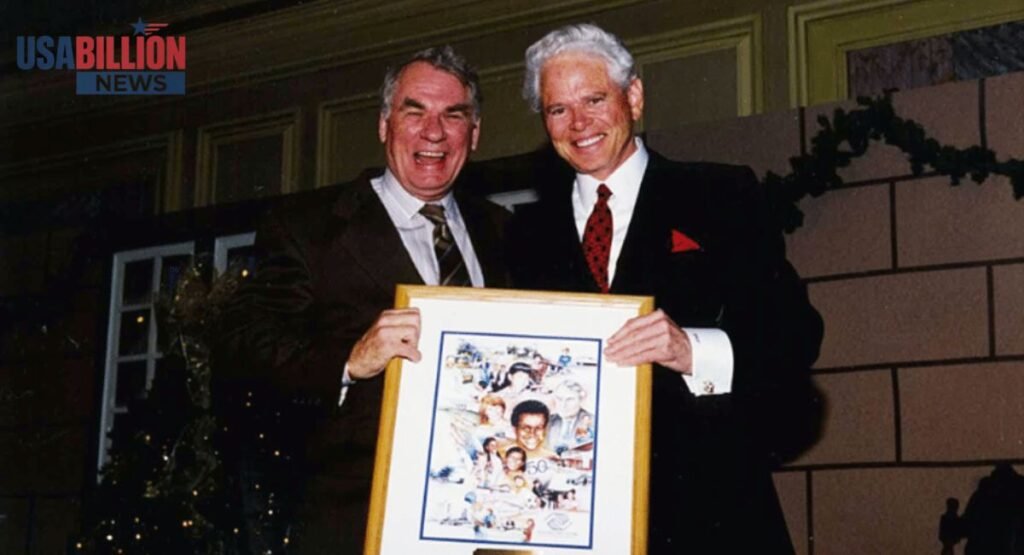
John Teets philanthropy is one of the most underreported aspects of his remarkable life. For a man of his stature and achievement, he gave back with a generosity and consistency that went far beyond writing checks. During his tenure as chairman of Dial, John created Dial’s community giving program, which provided funding for hundreds of charities and community projects, overseeing contributions to charitable organizations throughout Arizona. In particular he served as the general chairman of the Boys & Girls Club’s 50th Anniversary Campaign. His efforts made possible the building of a new Boys & Girls Club in Avondale, Arizona, including a scholarship programs fund, new computer labs, and an endowment fund to ensure financial security for the Boys & Girls Club’s programs and services.
His community development projects reached an impressive range of organizations. John’s efforts impacted many organizations including St Mary’s Food Bank, Special Olympics AZ, Foundation for Blind Children, AZ Humane Society, St Vincent De Paul, and the Phoenix Art Museum. Each of those organizations serves a different vulnerable population — hungry families, people with disabilities, children who can’t see, abandoned animals, people in poverty, and culture seekers. That breadth of giving tells you something important about who he was as a person. His charitable work wasn’t transactional. It came from genuine care. He also made his mark on Arizona’s public policy landscape. John also promoted significant public policy issues within the state, including taking a leadership role in establishing a Victims’ Rights Amendment to the Arizona Constitution in 1990. This was a landmark achievement that affords all victims of crimes with the opportunity to have a participatory role in the criminal justice system. The Victims’ Rights Amendment to the Arizona Constitution stands as one of the most lasting and meaningful community development projects contributions of his entire career — a piece of law that protects real people from real harm, every single day.
Awards, Achievements and Lasting Legacy
John Teets’ corporate achievements are genuinely remarkable when you lay them out side by side. He was recognized throughout his career as one of the most effective and results-driven executives in American business. His membership in the Business Roundtable — a group of CEOs from the largest corporations in the United States — reflects the respect he commanded among his peers at the highest levels of Corporate America. His leadership legacy runs deeper than awards. Consider what he actually built.
Here’s a summary of his most significant business achievements:
1. Youngest subsidiary COO in Greyhound history — at age 32, a record that reflected genuine extraordinary performance.
2. Grew Greyhound’s food division by 60 percent in four years — a sustained growth rate that would be remarkable in any era.
3. Sold the Armour meatpacking division to ConAgra for $2 billion — transforming a loss-generating division into a cash injection for strategic reinvestment.
4. Built Dial into a brand present in 8 out of 10 American homes — arguably the most powerful consumer penetration metric of his career.
5. Dial stock outperformed the S&P 500 by nearly 50 percent from 1991 to 1995 — delivering extraordinary shareholder value.
6. Created two publicly traded Fortune 500 companies from one — the $1.6 billion Dial Corporation and the $2.5 billion Viad Corp — in 1996.
7. Kept the Phoenix Suns in Arizona — a community achievement that millions of basketball fans benefited from.
8. Led the creation of the Arizona Victims’ Rights Constitutional Amendment — a landmark piece of public policy.
9. Built Dial’s community giving program, funding hundreds of Arizona charities.
10. Made Dobbs International the largest domestic airline caterer and Travelers Express the largest money order seller in the country, surpassing the U.S. Post Office.
That list is the record of a man who didn’t just succeed in business — he improved everything he touched. His business legacy and financial achievements place him firmly among the great transformational executives of 20th-century Corporate America.
Public Perception, Media Coverage and Lesser-Known Facts
John Teets’ media coverage was mixed during his career — as is the case with virtually every leader who makes bold, unpopular decisions in the pursuit of long-term value. The 1983 bus driver strike generated enormous negative press. Closing 29 meatpacking plants in a single day generated outrage. These were not decisions made to win popularity contests. They were decisions made to save a corporation. Over time, as the results of his restructuring became undeniable, the public perception of Teets shifted from “ruthless cost-cutter” to “brilliant corporate architect.” Publications like The Wall Street Journal and Fortune covered his transformation of Greyhound into Dial with growing respect as the financial results proved his vision correct.
Here are some lesser-known facts about John Teets that most biographies overlook:
Fact 1: He was a partner in an entertainment complex at just 29 years old — before ever working in corporate America. That entrepreneurial grounding shaped everything that followed.
Fact 2: He joined Greyhound specifically to develop restaurants at the 1963 New York World’s Fair — a decidedly non-corporate starting point for a future Fortune 500 CEO.
Fact 3: Dial’s service companies became absolute industry leaders — Greyhound Leisure Services was the world’s largest operator of duty-free shops on cruise ships, and Travelers Express was the nation’s largest seller of money orders, exceeding the U.S. Post Office. Most people have no idea those businesses even existed.
Fact 4: He championed the Arizona Diamondbacks as the first corporate investor in the expansion MLB team — meaning Phoenix’s baseball legacy has a direct connection to his boardroom decisions.
Fact 5: At its peak under Teets, Dial products were sold in 78 countries and manufactured in 15 plants — a global footprint most Americans never knew came from his leadership.
Fact 6: When the Dial Corporation was eventually acquired by Henkel in 2004 for approximately $2.9 billion, the foundation Teets built was what made that valuation possible.
These facts paint a portrait of a man whose public perception during his most controversial moments never fully captured the scale and durability of what he actually built. His story is one where the long view — the 20- and 30-year view — makes the picture far more impressive than any single news cycle ever suggested.
Conclusion
John Teets was, in the truest sense, one of the great American businessman leaders of the 20th century — even if his name doesn’t ring bells the way Iacocca or Welch do. He took a mocked, struggling conglomerate called “the dog” and turned it into two thriving Fortune 500 powerhouses worth a combined $4+ billion. He built brands that sat in eight out of ten American homes. He made his adopted city of Phoenix better — through sports, scholarships, constitutional amendments, and a career’s worth of charitable giving. John Teets Net Worth 2026 tells part of the story — an estimated $40 million to $50 million or more, built through decades of elite executive leadership and smart business investments. But the fuller story is written in the companies he built, the people he helped, and the communities he shaped. That’s a legacy that no net worth estimate can fully capture. If you’re building a business, leading a team, or looking for a model of what disciplined, principled corporate leadership actually looks like — study John Teets. His story holds lessons that are just as relevant today as they were in the boardrooms of the 1980s and 1990s.
Read Also:Norma Strait Net Worth 2026: Age, Height, Husband, Family & Life
FAQs
What was John Teets’ net worth?
John Teets’ net worth at his career peak is estimated between $40 million and $50 million, built through elite executive compensation, stock options, and smart real estate investments. His John Teets wealth reflects three decades of transformational corporate leadership at the very top of Corporate America.
How did John Teets build his fortune?
John Teets built his John Teets fortune through high executive salary packages, performance bonuses, and stock options that surged as Dial Corporation beat the S&P 500 by nearly 50 percent. Smart business investments and real estate investments added further strength to his overall financial portfolio over time.
What companies did John Teets lead?
John Teets served as Chairman and CEO of Greyhound Corporation, Greyhound Food Management, The Dial Corporation, and Viad Corp across his remarkable career. He also led Armour & Company and built the Dial Consumer Products Group during his years of bold corporate restructuring.
When did John Teets retire and pass away?
John Teets announced his retirement at the start of 1997, right after completing the historic split of Dial Corp into Dial Corporation and Viad Corp. He passed away on August 5, 2011, at the age of 77, leaving behind an extraordinary business legacy.
What is John Teets’ business legacy?
John Teets’ business legacy rests on transforming a struggling conglomerate into two Fortune 500 powerhouses — the $1.6 billion Dial Corporation and the $2.5 billion Viad Corp. He built Dial into a brand found in eight out of ten American homes, sold across 78 countries worldwide.
Was John Teets involved in philanthropy?
Yes — John Teets philanthropy was genuine and wide-ranging, funding hundreds of Arizona charities through Dial’s community giving program, including scholarship programs and computer labs via the Boys & Girls Club. He also championed the Arizona Victims’ Rights Constitutional Amendment in 1990, one of his most lasting community impact contributions.
What made John Teets a successful CEO?
John Teets succeeded by combining real operational experience with bold strategic business decisions, an uncompromising focus on financial success, and the courage to make tough, unpopular calls that delivered long-term shareholder value. His business innovation, deep management expertise, and commitment to corporate governance made him one of the most effective business executives of his generation.











1 thought on “John Teets Net Worth 2026: Biography, Career & Business Legacy”