
Introduction: The Name That Keeps Everyone Curious
There is something genuinely fascinating about Auggie Savage — not because of anything he has said or done publicly, but precisely because he hasn’t said or done anything publicly at all. He has never appeared on a red carpet. He has never been photographed by paparazzi outside a trendy Hollywood restaurant. He has never posted a single photo on Instagram, never uploaded a video to TikTok, never given so much as a brief comment in a magazine feature. He is, in the most literal and complete sense, a private person — a young teenager living a private life in a country that is deeply, insatiably curious about him.
The reason for that curiosity is not mysterious. His father is Fred Savage, one of the most genuinely beloved figures in the entire history of American television. For generations of Americans who grew up watching The Wonder Years in the late 1980s and early 1990s, Fred Savage is not merely a celebrity — he is something closer to a shared memory. Kevin Arnold, the wide-eyed suburban boy Fred played for six seasons on that landmark ABC series, became a vessel for an entire generation’s nostalgia, longing, and tenderness about their own childhoods. The people who loved Kevin Arnold loved Fred Savage for bringing him to life with such apparent sincerity, and that love has persisted, in the quiet, durable way that great childhood television tends to persist, for decades. When those people discover that Fred Savage has three children — that he is, in his real life, actually a father — they naturally want to know more. And the youngest of those children, born in 2012 and named Auggie, has become the most searched.
This article exists to serve that curiosity honestly, thoroughly, and responsibly. It gathers everything that is publicly known about Auggie Savage — his biographical details, his family history, the world he is growing up in, the Hollywood culture that surrounds him without defining him, and the future that lies ahead — and presents it in a way that respects both the reader’s legitimate interest and Auggie’s equally legitimate right to privacy. He is, after all, fourteen years old. He did not choose his family name. He did not apply for public attention. He deserves to be written about with care.
What follows is the most complete and responsible account of Auggie Savage’s life that the available evidence makes possible.
Who Is Auggie Savage?

Auggie Savage is the youngest child of American actor, director, and producer Fred Savage and his wife Jennifer Lynn Stone. He was born on May 5, 2012, making him fourteen years old as of 2026. He is an American citizen who has grown up almost entirely outside the media spotlight, a circumstance that is neither accidental nor particularly easy to maintain given the prominence of his father’s career. His parents have made deliberate, consistent, and evidently successful efforts to keep his life private, and those efforts have worked to a degree that is remarkable in the contemporary celebrity landscape.
The name Auggie Savage generates consistent and growing search traffic online, driven almost entirely by the public’s enduring affection for his father and their natural curiosity about the family Fred Savage has built in the years since The Wonder Years made him famous. People want to know who Auggie is, how old he is, what his siblings are like, what kind of child grows up in the household of one of television’s most iconic figures. These are human questions, rooted in genuine warmth toward Fred Savage, and they deserve genuine answers where answers exist.
What makes Auggie Savage particularly interesting as a subject, however, is the contrast he represents with the prevailing culture of celebrity childhood. We live in an era when many famous parents treat their children’s lives as content — posting birthday celebrations, first days of school, vacation photos, and everyday moments to millions of followers who engage with it all enthusiastically. Some celebrity children become famous in their own right before they are old enough to fully understand what fame means or to meaningfully consent to it. Others carry social media followings in the millions before they reach high school. Against that backdrop, Auggie Savage stands as a conspicuous exception. He has none of that visibility, none of that exposure, and from everything we can observe from the outside, he has none of those complications. He is, against considerable odds, just a kid.
That is not an accident. It is a choice — specifically, a choice made by his parents — and understanding that choice requires understanding the family that made it.
What Sets Auggie Savage Apart Among Celebrity Children
The children of famous parents occupy a peculiar and increasingly visible position in modern culture. Some, like North West and Blue Ivy Carter, have grown up almost entirely in public view, their personalities and preferences and early milestones documented in extraordinary detail for enormous global audiences. Others, like the children of actors who made their careers before social media transformed the publicity landscape, have had slightly more conventional childhoods simply because the mechanisms of modern celebrity oversharing didn’t exist when they were young.
Auggie Savage is in neither category. He was born in 2012, when social media was already fully formed and ubiquitous, when Instagram was already a cultural institution, when the expectation that celebrity parents would share their children’s lives online was already firmly established. His parents had every opportunity and arguably some professional incentive to participate in that culture. They chose not to. That deliberate rejection of celebrity parenting norms is the single most defining fact about Auggie Savage’s life outside the family home, and it says something important about who his parents are and what they value.
Quick Biography and Personal Details
For readers who want the core verified facts in one place before diving into the longer narrative, here is everything that is publicly confirmed about Auggie Savage as of 2026.
| Detail | Information |
| Full Name | Auggie Savage |
| Date of Birth | May 5, 2012 |
| Age in 2026 | 14 years old |
| Birthplace | United States |
| Nationality | American |
| Zodiac Sign | Taurus |
| Father | Fred Savage |
| Mother | Jennifer Lynn Stone |
| Siblings | Oliver Savage (older brother), Lily Savage (older sister) |
| Birth Order | Youngest of three children |
| Social Media | No verified public accounts |
| Profession | N/A — minor |
| Religion | Not publicly confirmed |
| Known For | Being the youngest child of Fred Savage |
Those facts are the entire extent of what is publicly verified. There is no confirmed information about Auggie’s school, his hobbies, his friendships, his interests, his personality, or any other detail of his personal life. This is not because the information doesn’t exist — Auggie is a real person living a real life full of such details — but because his family has successfully kept those details out of the public domain, which is their right and reflects their values.
How Old Is Auggie Savage in 2026?
Auggie Savage is fourteen years old in 2026. His birthday falls on May 5th, placing him firmly in the Taurus zodiac sign, which spans from April 20 through May 20. At fourteen, he is in the thick of early adolescence — a period that developmental psychologists generally describe as one of the most complex and formative of human life. The teenage years are when identity begins to crystallize, when peer relationships take on new significance, when the question of who you are and who you want to become starts to feel genuinely urgent. For Auggie, that process is unfolding privately, as his parents have always intended, away from the cameras and comment sections that accompany so many celebrity childhoods.
The Taurus placement is worth a brief mention not because astrology offers verified truths about personality, but because it’s a detail people consistently search for, and because the qualities traditionally associated with the sign — groundedness, patience, a preference for stability and security over flashiness and chaos — seem curiously fitting for someone raised in the thoughtfully low-key Savage household. Whether that reflects anything meaningful about Auggie specifically is impossible to say from the outside. It is simply an interesting coincidence, or perhaps not a coincidence at all.
Fred Savage: Father, Career, and Enduring Legacy

To understand the world Auggie Savage is growing up in, you have to understand his father, because Fred Savage’s career and reputation are the context for everything. He is not famous in the way that most contemporary celebrities are famous — through carefully managed social media presences, brand partnerships, and a constant cycle of publicity. He is famous in a quieter, deeper, more durable way: through a performance that meant something genuine to tens of millions of people, delivered over six seasons of television in the late 1980s and early 1990s, that has never fully released its hold on the audience that experienced it.
From Highland Park to Hollywood
Frederick Aaron Savage was born on July 9, 1976, in Highland Park, Illinois, a comfortable suburb on the North Shore of Chicago. He grew up in a family that was not particularly connected to the entertainment industry, though the environment clearly supported creative ambition — his younger brother Ben would later become equally famous in his own television career. Fred began performing as a child, doing local theater and securing commercial work before his family eventually relocated to give his career a more serious platform.
His early television appearances were promising enough to suggest real talent. He appeared in various projects through the mid-1980s, building the kind of quiet professional foundation that allows a child actor to develop technique without the pressure of sudden, overwhelming fame. That pressure came soon enough, but by the time it arrived, Fred Savage had enough professional experience to handle it with something approaching grace.
The Wonder Years: A Career-Defining Performance
The role that changed everything came in 1988, when Fred Savage, eleven years old, was cast as Kevin Arnold in The Wonder Years on ABC. The show was a radical departure from what American family television looked like at the time. Rather than following the broad comedic rhythms of the family sitcom — the genre that dominated the landscape — The Wonder Years was quiet, reflective, and emotionally honest. It told the story of Kevin Arnold growing up in a suburban American neighborhood in the late 1960s and early 1970s, narrated from the perspective of his adult self looking back. The show was about memory, loss, first love, the complicated love between parents and children, the specific texture of American middle-class life in a particular historical moment.
It was, to put it simply, extraordinary television. And Fred Savage was the engine of it.
What Fred Savage did in The Wonder Years is worth describing in some detail, because it is not something that happens very often in child performance. He did not simply play a role convincingly — many child actors can do that. He created a character who felt genuinely inhabited, genuinely real, whose interior life seemed to extend beyond what the script provided, who seemed to be actually thinking and feeling rather than performing thinking and feeling. That quality — the quality of genuine inhabitation — is what separates good acting from great acting at any age. In an eleven-year-old, it was almost uncanny.
The show ran from 1988 to 1993, six full seasons of Fred Savage navigating Kevin Arnold through adolescence on screen while simultaneously navigating his own adolescence in real life. The dual experience — the fictional one and the real one — gave his performance a kind of authenticity that no amount of craft can fully replicate. Kevin Arnold’s confusion, his tenderness, his attempts at bravery and his persistent failures were not entirely fictional. They were also, in some measure, Fred Savage’s own.
The professional recognition matched the cultural impact. Fred Savage was nominated for Emmy Awards at thirteen and fourteen, becoming one of the youngest actors in history to receive Emmy nominations in a lead performance category. The show won the Golden Globe for Best Television Series. It entered the permanent vocabulary of American pop culture in a way that very few television shows manage, and it did so largely on the strength of Fred Savage’s performance at its center.
The connection that audiences formed with Fred Savage during those years has never fully dissolved. This is the remarkable thing about genuinely great television: it creates a relationship between the viewer and the performer that persists long after the show ends, long after both parties have moved through decades of subsequent life. The people who watched The Wonder Years as teenagers in 1988 are now in their fifties. They are parents themselves, many of them. When they encounter Fred Savage’s name in a search result, or see a reference to his family, they feel something — a warmth, a recognition, a genuine interest in how his life has turned out — that is entirely different from the passing curiosity one might feel about any other celebrity. That difference is what makes Auggie Savage a subject of sustained public interest rather than a passing search trend.
Building a Second Career Behind the Camera
When The Wonder Years ended in 1993, Fred Savage was seventeen years old. He had options that most seventeen-year-olds cannot imagine, and he navigated them with a thoughtfulness that would become a defining characteristic of his adult professional life. He continued acting through his late teens and twenties, taking roles that allowed him to explore different kinds of performance while stepping carefully away from the shadow of Kevin Arnold. He attended Stanford University, studying English literature — a choice that reflected both intellectual curiosity and a desire for the kind of normal college experience that his childhood fame had made impossible to have at the expected time.
But the most significant development in Fred Savage’s post-Wonder Years career was not another acting role. It was his transition to directing and producing. Somewhere in the process of working on television sets from the age of eleven, Fred Savage developed a deep understanding of how those sets worked — how stories were constructed, how scenes were built, how the collaboration between writers and directors and actors produced the finished thing that audiences eventually saw. That understanding translated, in his adult years, into a substantial career as a director.
His directing credits represent an impressive range of quality television. He directed multiple episodes of It’s Always Sunny in Philadelphia, the FX comedy that has run for an extraordinary eighteen seasons and counting, widely considered one of the most influential comedies in cable television history. He directed episodes of Modern Family, the ABC ensemble comedy that won the Emmy for Outstanding Comedy Series five consecutive times from 2010 through 2014. He worked on The Grinder, Party Down, and numerous other projects. He served as executive producer on multiple series, bringing creative oversight to shows at the development and production level.
This behind-the-scenes career is significant in ways that go beyond the impressive resume. Directing and producing television are fundamentally different from acting in terms of the skills they require and the kind of intelligence they reward. An actor must be present in a scene, emotionally available, technically precise within the specific frame of their performance. A director must hold the entire episode — or the entire series — in mind simultaneously, making hundreds of decisions that collectively determine the quality and character of what audiences see. Fred Savage’s success in that role is evidence of an unusually comprehensive understanding of storytelling, one that extends well beyond the particular gift he demonstrated as a child actor.
The Wonder Years Revival and Continuing Relevance
Fred Savage’s relationship with his most famous project did not end in 1993. Decades later, The Wonder Years returned in a new form — a reimagined series with a new cast, a new setting, and a new historical context, but the same foundational commitment to honest, tender storytelling about American adolescence. Fred Savage served as an executive producer on the revival, bringing his understanding of what had made the original meaningful to bear on its contemporary reincarnation.
The revival generated significant attention, both from longtime fans of the original and from new audiences encountering the concept for the first time. Fred Savage’s involvement ensured that the project was understood as a genuine creative endeavor rather than a simple cash-in on nostalgia. It also reminded everyone paying attention that his connection to that particular story, that particular vision of American childhood and adolescence, was not merely biographical — it was something he continued to invest in creatively, decades after the original had ended.
That continued relevance matters for understanding the public interest in Auggie Savage. Fred Savage is not a figure from the distant past whose former fame makes his family history mildly interesting. He is an active participant in contemporary American television, a working director and producer with ongoing projects, a figure whose name appears in entertainment news with some regularity. Every time it does, curiosity about his family follows naturally.
Jennifer Lynn Stone: The Quiet Backbone of the Savage Family
Any serious account of Auggie Savage’s life must spend real time on his mother, Jennifer Lynn Stone, because she is almost certainly as important to the shape of his childhood as his famous father — and she is, by design and by choice, almost entirely absent from the public record.
Jennifer Lynn Stone is not a celebrity. She has never worked in the entertainment industry in any capacity that has received public attention. She did not arrive in Fred Savage’s life carrying a public profile of her own, and she has not acquired one through her marriage to him. In a culture that makes fame adjacency available to anyone willing to leverage it — where spouses and siblings and friends of famous people routinely parlay their connections into social media followings, reality television appearances, or at minimum a reliably documented presence at industry events — Jennifer Lynn Stone has declined every available opportunity to be publicly known. She and Fred have been married for many years, and in all that time, she has maintained a privacy that is, in the contemporary celebrity context, almost startling.
This matters for understanding Auggie Savage because children absorb values from both parents, and Jennifer’s values are evident even when her details are not. A woman who chooses consistent, comprehensive privacy over the easy visibility that her position makes available is a woman who has thought seriously about what matters and what doesn’t. She has decided, clearly and repeatedly, that public attention is not something she needs, not something that adds to her life, not something she wants her children to be defined by. That decision is reflected directly in how Auggie and his siblings have been raised.
The parental dynamic in the Savage household — a famous father who is famous for the right reasons and who has never made his family’s private life into professional content, and a private mother who seems entirely content with the genuine substance of her life rather than its public perception — is an unusual and admirable one. It creates an environment in which the lesson modeled for children every day is that worth and happiness are not functions of visibility, that a full and meaningful life can be built entirely outside the spotlight, that fame is one possible outcome in the world and not a particularly important one.
For Auggie Savage, growing up with that lesson modeled consistently by both parents is likely one of the most valuable things his childhood has given him.
What Parental Influence Looks Like in Practice
The influence Fred and Jennifer have on Auggie’s development is not something we can observe directly, but we can infer its character from what we know about how both parents have conducted their own lives. Fred Savage built an enormous career without becoming a tabloid figure, without making his family into content, without any of the excesses that so often accompany sustained fame in the entertainment industry. He is, by all available evidence, a professional who takes his work seriously and a private person who takes his family seriously, and he has managed to keep those two spheres reasonably separate.
Jennifer Lynn Stone, for her part, has modeled something equally important: the possibility of a complete and fulfilling life lived entirely outside public scrutiny. In a culture that sometimes implies, through sheer volume of celebrity coverage, that private life is somehow lesser than public life, Jennifer’s choice is a quiet but powerful counter-argument. She has chosen depth over breadth, genuine relationships over public ones, the substance of her actual life over the performance of a life for external audiences.
Together, those two models — the father who navigates public life with dignity and restraint, the mother who opts out of public life entirely and thrives — give Auggie Savage a richer set of examples to draw on than most teenagers ever have access to. He can see, concretely and daily, that fame and fulfillment are not the same thing, that worth is not measured in followers or coverage, that the most important parts of a person’s life are almost never the parts that other people can see.
Early Life and Childhood
Auggie Savage’s early life is the most searched and least documented aspect of his existence, which is exactly how his parents intended it. The details of his childhood — his schools, his friends, his interests, his formative experiences — are not available in the public record because his family has successfully kept them out of it. This is a genuine achievement that deserves acknowledgment before anything else.
What we can say with reasonable confidence, based on everything we know about the Savage family’s values and environment, is that Auggie has grown up in a household that prioritizes stability, creativity, and genuine human connection over social performance and external validation. The home Fred Savage and Jennifer Lynn Stone have built is one where both parents are actively engaged, where the family’s private life is treated as genuinely precious rather than as content to be shared, and where the rhythms of ordinary family existence — meals together, conversations, the small and large rituals of domestic life — take precedence over the demands of celebrity culture.
The Experience of Growing Up Adjacent to Hollywood
Growing up in a family connected to Hollywood is an experience that defies easy generalization. It is neither the glamorous adventure that outsiders sometimes imagine nor the uniformly damaging one that cautionary tales about child stars might suggest. It is, like most childhood experiences, a complex mixture of ordinary and extraordinary, of advantage and challenge, shaped above all by the specific choices and values of the parents involved.
For Auggie Savage, proximity to the entertainment industry has almost certainly provided experiences and exposures that most teenagers in America simply don’t have. He has probably visited film sets. He has probably been present at industry gatherings where producers, writers, directors, and performers talked about their work with the kind of specificity and passion that comes from genuine professional engagement. He has grown up hearing conversations about storytelling, about what makes television work or fail, about the craft of performance and direction, at a level of sophistication that no classroom can replicate.
At the same time, his parents have clearly ensured that these enriching exposures don’t overwhelm the ordinary texture of childhood. The goal, as best as we can read it from the outside, has not been to give Auggie the maximum possible access to Hollywood — it has been to give him the maximum possible access to a real childhood, with Hollywood present in the background as context rather than foreground as environment.
That balance is genuinely difficult to strike, and most families who try to strike it fail in one direction or the other. Some become so protective that they cut their children off from experiences that would enrich them. Others allow the celebrity world to seep so deeply into family life that the children lose their grounding in ordinary reality. The Savage family appears to have found something more like the right equilibrium — engaged with the industry, respectful of its opportunities, but fundamentally committed to a life that is not defined by it.
What Adolescence Looks Like in the Savage Household
At fourteen, Auggie Savage is navigating precisely the same developmental landscape that every American teenager navigates: the construction of an identity separate from but inevitably shaped by the family he was born into; the intensifying importance of peer relationships; the first serious engagements with questions about what he values, what he’s good at, and who he wants to become. These are the universal concerns of adolescence, and they unfold in more or less the same way regardless of a teenager’s family circumstances.
What Auggie’s family circumstances do — and this is their gift to him — is provide a stable and grounded foundation for that navigation. Teenagers who know who their parents are, who have clear models of adult life that are worth emulating, who are not burdened by the anxieties that unstable or chaotic family environments create, tend to navigate adolescence with more confidence and less confusion than those who lack that foundation. Everything we can observe about the Savage family suggests that Auggie has that foundation.
He also has, in his two older siblings, models who have walked similar terrain before him. Oliver Savage and Lily Savage have both grown up in the same household, navigated the same combination of advantages and unusual pressures, and emerged — as far as the public record allows us to see — with their privacy and presumably their groundedness intact. Watching older siblings manage a situation successfully is one of the most reliable forms of informal education a teenager can receive.
Growing Up in a Hollywood Family: The Full Picture
The phrase “Hollywood family” conjures a specific set of images in popular culture: extravagant wealth, red carpet appearances, the dizzying social world of the entertainment industry, and children who grow up either dazzled by all of it or damaged by it. The reality is considerably more varied and considerably more interesting.
Hollywood is not monolithic. It contains some families who live entirely within its most extreme version — the parties, the publicity, the constant performance of celebrity life — and others who treat it as a professional context rather than a total way of being. Fred Savage is clearly in the second category, and that means Auggie’s experience of growing up in a Hollywood family is shaped by a father who has always understood that the work and the life are separate things, that what happens on a set is professional and what happens at home is personal, and that the personal deserves protection.
The Real Advantages of Creative Parents
Among the genuine advantages of growing up with a father who has spent his entire career immersed in storytelling — first as an actor, then as a director and producer — is the intellectual environment that tends to create at home. People who work in narrative, who think for a living about how stories work, why characters resonate, what makes an audience feel something genuine rather than something manufactured, tend to be interesting conversationalists. They tend to think carefully about cause and effect, about motivation, about the gap between what people say and what they mean.
These qualities make for rich family dinner conversation. They also make for a home environment in which ideas are taken seriously, in which creative problem-solving is valued, in which the life of the mind is treated as something important and interesting rather than secondary to practical concerns. Children who grow up in those environments tend to develop strong communication skills, a facility with abstract thinking, and a natural curiosity about the world that serves them well in virtually any field they eventually choose to enter.
Whether Auggie Savage is the beneficiary of this kind of intellectual richness at home is something we cannot confirm from the outside. But given what we know about his father’s work and his family’s values, it seems more than reasonable to infer.
The Real Challenges of a Famous Last Name
Against those advantages, there are real challenges specific to growing up with a well-known name, and honesty requires acknowledging them. The most fundamental of those challenges is the question of identity — specifically, the difficulty of developing a clear, autonomous sense of self when your last name already comes attached to a public meaning that you had no part in creating.
For teenagers, whose primary developmental task is precisely the construction of a distinct personal identity, carrying a famous family name creates an additional complication. Other people — classmates, teachers, acquaintances, strangers on the internet — approach you with preformed associations, expectations, and sometimes projections that have nothing to do with who you actually are. Some of those associations are positive and some are not, but all of them risk obscuring the actual person behind the convenient shorthand of the famous name.
The internet makes this worse in ways that previous generations of celebrity children didn’t have to navigate. Auggie Savage has grown up in a world where curious strangers can search for information about him from anywhere, where speculation about his life can circulate without his knowledge or consent, where the gap between private reality and public narrative is potentially enormous and potentially difficult to manage. The fact that his family has minimized his public footprint so effectively is, among other things, a protection against precisely these dynamics.
What Fred Savage’s Sustained Career Means for Auggie’s Identity
One aspect of Auggie’s situation that distinguishes it from that of many celebrity children is that his father is famous for something genuinely good. Fred Savage’s fame is built on a performance that made people feel seen, on a story that captured something true about American adolescence, on work that has only appreciated in cultural standing as the years have passed. Being the son of that person, carrying that particular famous name, is not a burden in the way that being the child of a notorious or controversial figure might be. It is, if anything, a kind of gentle distinction — the association carries warmth rather than complication.
This matters for how Auggie is likely to experience his family name as he grows up. Teenagers whose parents are famous for admirable reasons tend to have an easier time with the identity questions that fame adjacency creates than those whose parents are famous for less admirable ones. The cultural meaning of “Savage” in the entertainment context is almost uniformly positive, and that means Auggie’s relationship to his own name is probably less fraught than it might otherwise be.
The Influence of Hollywood Family Culture on Auggie’s Development
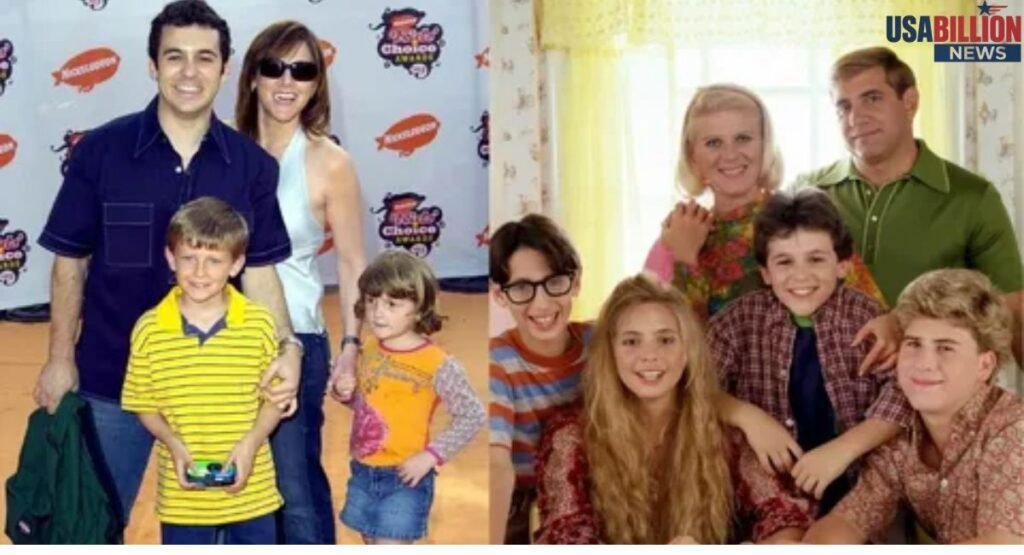
Hollywood family culture, as a social phenomenon, is worth examining carefully because it shapes the environment in which Auggie Savage is growing up in ways that are both direct and indirect. The entertainment industry is a world with its own values, its own hierarchies, its own definitions of success and failure, its own social rhythms and pressures. Children who grow up adjacent to it inevitably absorb some of its characteristics, whether or not their parents make any deliberate effort to expose them to it.
The Savage Family Legacy in Entertainment
The Savage family name carries real weight in American television history, and not only because of Fred. Ben Savage — Auggie’s uncle — built his own substantial career playing Cory Matthews in Boy Meets World, the ABC sitcom that ran from 1993 to 2000 and developed its own devoted following. Boy Meets World has, if anything, grown in cultural significance in the years since its original run, partly due to a successful sequel series (Girl Meets World) that introduced new audiences to the original material.
Growing up as the nephew of Cory Matthews and the son of Kevin Arnold — two of the most recognizable characters in beloved American family television — gives Auggie a particularly rich and specific kind of family legacy to navigate. Both characters represent versions of the same essential thing: the honest, slightly awkward, fundamentally decent American boy growing up in a suburban family, trying to figure out love and friendship and what it means to become a man. That both his father and his uncle gave those characters life, and that audiences responded to both with genuine and lasting affection, creates an interesting context for Auggie’s own coming-of-age.
Whether that legacy is primarily inspiring or primarily pressurizing probably depends on the specific day and the specific mood. On good days, it is likely a source of pride and a reminder that his family has contributed something meaningful to American culture. On harder days, it is likely a standard that feels impossibly high, a reminder that the bar for what a Savage is supposed to accomplish has been set very conspicuously by two different people before him. Navigating that dual experience — pride and pressure, legacy and expectation — is one of the genuinely distinctive challenges of Auggie’s particular situation.
Creativity as a Family Value
Whatever else is true about the Savage household, creativity is almost certainly a foundational value. Fred Savage has spent his entire career in service of creative work — first by performing it, then by directing and producing it. The craft of storytelling, the discipline that makes stories work, the collaboration that transforms ideas into finished pieces of television — these are the things that have structured his professional life for more than thirty years, and they are almost certainly present in the family environment he has created.
Children who grow up in households where creative work is taken seriously — where ideas are discussed, where stories are analyzed, where the question “why does this work?” is asked regularly and earnestly — tend to develop particular cognitive strengths. They often become good at seeing patterns in narrative, at understanding motivation and consequence, at communicating complex ideas clearly. These are skills that serve people well in virtually any field, and they are skills that Auggie Savage is probably developing, even if the process is invisible from the outside.
Siblings and Family Dynamics: Oliver and Lily Savage
Auggie Savage is the youngest of three children, and that birth-order position shapes his experience in ways that developmental psychology has spent considerable effort documenting. Being the youngest child means, among other things, that you have older siblings whose experiences of the same family and the same world you can observe before navigating them yourself. It means that your parents have already worked through some of their early parenting anxieties and uncertainties before they get to you. And it means that the family identity is already somewhat established when you arrive into it, giving you a context to absorb and eventually define yourself in relation to.
Oliver Savage: The Oldest Child
Oliver Savage is Fred and Jennifer’s eldest child, and like his younger siblings, he maintains no significant public profile. The available public information about Oliver is limited to his existence and his birth order. He has not appeared in entertainment contexts, has not been documented in celebrity coverage in any sustained way, and appears to be living as privately as his brother and sister. This consistency across all three children — not one of them has developed a public profile or sought public attention — is one of the clearest indicators that the Savage family’s approach to privacy is a genuine and consistently applied value rather than a case-by-case determination.
Lily Savage: The Middle Child
Lily Savage occupies the middle position in the Savage family’s birth order, a position that has its own distinctive dynamics — the experience of being neither the firstborn, who often carries particular expectations and attention, nor the youngest, who often occupies a specific family role as the baby. Lily, like Oliver, maintains a private life and has not appeared in public contexts in any documented way. The three Savage children together represent something that is genuinely unusual in contemporary celebrity culture: a complete absence of attention-seeking behavior across an entire sibling group, sustained over years in an environment that would make such behavior easy and even professionally advantageous.
Sibling Bonds as a Support System
For Auggie Savage specifically, having two older siblings who have navigated similar circumstances is a resource of genuine importance. Growing up with a famous father, living with the particular combination of advantages and unusual pressures that creates, is an experience that most of his peers — however close, however well-meaning — cannot fully understand from the inside. Oliver and Lily can. They have lived the same experience, answered the same questions from classmates and acquaintances, managed the same curious attention, negotiated the same balance between family identity and personal identity.
That shared understanding is the foundation for a particular kind of sibling bond — one built not just on the generic closeness of people who grew up in the same household, but on the specific solidarity of people who face the same distinctive challenges. Auggie, as the youngest, benefits from watching how his older siblings have handled those challenges before he faces them himself. That observational learning is among the most valuable kinds.
Why People Search for Auggie Savage Online
The consistent and growing online interest in Auggie Savage reflects several converging forces that are worth examining individually, because understanding them helps clarify not just why people search for Auggie specifically but why celebrity children generate internet interest in general.
The Extended Connection to Fred Savage
The primary driver of search interest in Auggie Savage is straightforwardly the love that audiences have carried for his father since The Wonder Years. This is not casual celebrity interest — it is something deeper and more durable, rooted in the way that great television creates genuine emotional connection between viewers and performers. The people who searched for information about Fred Savage in the early 1990s, who kept track of his career through his directing years, who felt something real when the Wonder Years revival was announced — those people are genuinely interested in how Fred Savage’s life has turned out, and “how his life has turned out” includes his children.
Searching for Auggie Savage is, in this sense, an extension of a relationship with Fred Savage that began decades before Auggie was born. It is an expression of the same impulse that makes us wonder what happened to the people we cared about — the curiosity is continuous, it just extends from the person we originally connected with to the family they have built.
The Psychology of Information Scarcity
There is a well-documented psychological phenomenon in which the absence of information about a subject increases rather than decreases interest in it. When people can find everything they want to know about a celebrity or a celebrity’s family with a few search queries, the curiosity is satisfied and tends to diminish. When the information is scarce, the curiosity remains unsatisfied and tends to intensify.
Auggie Savage is a case study in this dynamic. The very privacy that his family has maintained so carefully — the absence of social media accounts, the lack of paparazzi coverage, the scarcity of any verified personal details — creates an information gap that people keep trying to fill. Each search that returns limited results is not a deterrent but a provocation to search again, more carefully, from a different angle. The privacy that protects Auggie is also, paradoxically, part of what keeps public curiosity about him alive and growing.
The Broader Cultural Trend Toward Celebrity Family Interest
Over the past decade, interest in celebrity children and celebrity families has increased substantially across the internet. This trend reflects the broader transformation of celebrity culture in the social media era — audiences have access to more information about famous people than ever before, and that access has trained expectations for transparency and intimacy that keep escalating. As celebrity parents share more, audiences expect more, which drives celebrities to share more, which raises expectations further.
Within this broader cultural context, Auggie Savage represents an anomaly — a celebrity child about whom almost nothing is publicly available — and anomalies tend to attract attention precisely because they stand out against the prevailing pattern. He is the exception that proves the rule, the private kid in a world of conspicuously public celebrity childhoods, and that distinctiveness keeps him in the cultural conversation even as he remains entirely outside it personally.
Media Coverage, Responsible Reporting, and the Public Interest Question
The question of how media should cover celebrity children is genuinely complicated, and Auggie Savage sits at the center of that complication in an interesting way. He is clearly a subject of legitimate public curiosity — not because of anything he has done, but because of who his father is and the public’s enduring affection for that father. At the same time, he is a minor who did not choose the circumstances of his public interest, who has not sought attention in any form, and whose parents have made consistent and reasonable efforts to protect his privacy.
What Responsible Coverage Looks Like
Responsible coverage of Auggie Savage means different things in practice, but it starts with a commitment to the distinction between public figures and people who are connected to public figures. Fred Savage is a public figure. He has voluntarily entered public life, built a career on public attention, and accepted the scrutiny that comes with that position. Auggie Savage is none of those things. He is a private person — specifically, a fourteen-year-old private person — who happens to share a surname with a public figure.
The public’s interest in Auggie is real and it is not unreasonable, but it does not create an entitlement to information about his private life. It creates an entitlement to the information that is genuinely public — his name, his age, his parents, his siblings — and not to the information that is private. Coverage that respects that boundary is responsible coverage. Coverage that tries to penetrate it, that speculates about private details, that publishes information obtained without the family’s consent, is not.
This article has tried to hold to the responsible standard throughout. Everything presented here is either publicly confirmed or clearly labeled as inference. Nothing in it compromises Auggie’s privacy or safety. The goal has been to serve readers’ genuine curiosity with genuine information while maintaining the respect that any fourteen-year-old deserves, famous last name or not.
The Right to Privacy as a Principle
The ethical foundation for respecting Auggie Savage’s privacy is not complex. Children have rights that exist independently of their parents’ choices, and one of those rights is the right to a childhood that is not defined by the circumstances of their birth. Auggie did not choose to be born to a famous father. He did not seek the public attention his name generates. He cannot, at fourteen, make fully informed adult decisions about what level of public exposure he wants or is comfortable with. Until he is old enough to make those decisions for himself, they should default to protection rather than exposure.
This principle applies to celebrity children broadly, but it applies with particular force to children who, like Auggie, have had no part in creating or maintaining any public profile. A child who appears in their parent’s social media posts has at least been partially exposed by someone with parental authority over them. A child who has never appeared anywhere publicly — who is known to the outside world only through their name and a few biographical facts — has not. Auggie Savage is in the second category, and the coverage he receives should reflect that.
Public Attention and the Question of Privacy Rights
The tension between public curiosity and personal privacy is one of the defining tensions of contemporary life, and it bears on Auggie Savage’s situation in ways worth thinking through carefully. Public curiosity is real and legitimate. The people searching for information about Auggie are not acting maliciously — they are expressing genuine interest in the family of someone they care about, and that interest is rooted in warmth rather than intrusion. At the same time, the satisfaction of that curiosity cannot come at the cost of a child’s right to privacy.
The resolution of this tension is not to suppress the curiosity or to pretend it doesn’t exist. It is to channel it toward information that is genuinely appropriate to share — the biographical facts, the family context, the broader cultural story — and away from the personal details that Auggie and his family have not chosen to make public. That is what this article has attempted to do, and it is the standard that coverage of celebrity children should aspire to maintain.
What is ultimately most interesting about Auggie Savage is not the private details that remain unknown — it is the public story of a family that has managed, against considerable odds, to raise three children privately in a culture that makes privacy almost impossibly difficult to maintain. That story is about Fred Savage’s values and Jennifer Lynn Stone’s values and the choices they have made together. It is about what it means to protect the people you love in an environment that has no particular interest in helping you do so. It is, in other words, a story about parenting — and that is genuinely interesting regardless of who the parents happen to be.
What the Future May Hold for Auggie Savage
Speculation about the future of a fourteen-year-old is an inherently uncertain enterprise, and it should be approached with appropriate humility. At the same time, the question is one that readers consistently search for answers to, and it deserves thoughtful engagement even if confident predictions are impossible.
The Range of Possible Paths
Auggie Savage has, by any reasonable accounting, an extraordinary range of options available to him as he moves toward adulthood. His father’s connections and reputation in the entertainment industry mean that if he chooses to pursue a career in television or film — as an actor, director, writer, producer, or in any other capacity — he will have access to opportunities and mentorship that most aspiring entertainment professionals cannot imagine. The industry relationships Fred Savage has built over three decades represent, among other things, a network that could open doors for his son in ways that would be difficult to replicate through any other means.
But those connections are one option among many, not a predetermined destination. Many celebrity children deliberately choose paths outside the entertainment industry precisely because they want to establish identities that are entirely their own, free from the inevitable comparisons and complications that come with working in the same field as a famous parent. That choice is not a retreat or a failure — it is often a wise recognition that genuine fulfillment comes from doing work that you have chosen for your own reasons, not work that was chosen for you by the circumstances of your birth.
The academic path is equally open to Auggie, and the household he has grown up in seems likely to have supported the intellectual curiosity and disciplined thinking that academic success requires. Other paths — entrepreneurship, technology, creative fields outside entertainment, professional paths that haven’t been invented yet — are all possible. At fourteen, the only reasonable thing to say about Auggie Savage’s future is that it is genuinely open, and that the family environment he is growing up in appears designed to maximize that openness rather than channel it in any particular predetermined direction.
The Question of Public Life
Perhaps the most interesting and most genuinely uncertain question about Auggie Savage’s future is whether he will, at some point of his own choosing, step into public life. He will eventually be an adult who can make that decision for himself, on his own terms, for his own reasons. Some children of famous parents reach adulthood and decide that they want visibility — that they have things to say or contribute that require a public platform, or simply that they are comfortable with public attention in a way that their childhood privacy didn’t reflect a permanent preference for obscurity. Others reach adulthood and maintain the private life their parents established for them, building fulfilling existences that simply don’t intersect with the public sphere in any meaningful way.
Both outcomes are valid. Both deserve respect. What matters most, from the perspective of anyone who genuinely wishes Auggie Savage well, is not which path he chooses but that he has the genuine freedom to choose — that when the time comes for him to make that decision, it is made on the basis of his own values and desires rather than external pressure or the expectations created by his family name.
The Savage family’s approach to privacy throughout his childhood has, above all else, protected that freedom. By keeping his profile private until he is old enough to choose for himself, Fred and Jennifer have given Auggie the most precious gift available to any celebrity child: the gift of a choice that is genuinely his own.
Read Also:Vickie Ritchson 2026: The Inspiring Teacher & Woman Behind Alan Ritchson’s Success
FAQs
Who is Auggie Savage?
Auggie Savage is the youngest of three children born to Fred Savage — the American actor and director best known for his role as Kevin Arnold in The Wonder Years — and his wife Jennifer Lynn Stone. Born on May 5, 2012, Auggie is 14 years old as of 2026 and lives in the United States. He has no confirmed public social media presence and has never made any public appearances in his own right. Public interest in him is driven primarily by the enduring affection audiences feel toward his father and their natural curiosity about Fred Savage’s personal life and family.
How old is Auggie Savage in 2026?
Auggie Savage is 14 years old in 2026. His birthday is May 5, 2012, which also makes him a Taurus by zodiac sign. At 14, he is in the early stages of adolescence, a developmental period characterized by rapid identity formation, the deepening of peer relationships, and the beginning of serious engagement with questions about who a person wants to become. All of that is unfolding privately, consistent with his family’s approach to public life throughout his childhood.
Who are Auggie Savage’s parents?
Auggie Savage’s father is Fred Savage, the American actor and director whose career spans more than three decades and who is most famous for playing Kevin Arnold in The Wonder Years. His mother is Jennifer Lynn Stone, who has maintained a deliberately private life throughout her marriage to Fred and has no significant public profile of her own. Together they have built a family environment that is notable for its groundedness and its consistent commitment to keeping their children’s lives private.
Does Auggie Savage have siblings?
Yes. Auggie Savage has two older siblings. His older brother is Oliver Savage, the eldest of the three Savage children, and his older sister is Lily Savage, the middle child. Both Oliver and Lily maintain the same low public profile as Auggie — none of the three Savage children have verified public social media accounts or documented public presences. This consistency across all three children reflects a family-wide commitment to privacy rather than a circumstance specific to any individual child.
Is Auggie Savage on social media?
As of 2026, there are no verified public social media accounts associated with Auggie Savage. Any accounts online claiming to belong to Auggie Savage should be treated as unverified unless officially confirmed by the family. The absence of a verified social media presence is consistent with his family’s broader approach to privacy and their sustained effort to keep their children’s lives out of the public domain.
Why is Auggie Savage famous?
Auggie Savage is the subject of public curiosity primarily because of his father. Fred Savage is one of the most beloved figures in the history of American television, and the affection that audiences have carried for him since The Wonder Years naturally extends to interest in his family and children. Auggie has not done anything to create his own public profile — he is known entirely through his relationship to his father, and the public’s interest in him is an expression of their long-standing connection to Fred Savage rather than anything Auggie himself has said or done.
Will Auggie Savage become an actor?
There is no confirmed public information suggesting that Auggie Savage is pursuing or plans to pursue a career in acting or any other aspect of the entertainment industry. At 14, he is far from the point of making definitive professional choices, and his family’s approach to privacy makes it unlikely that any such plans would become public before he chose to make them so himself. Whether he follows his father and uncle into entertainment, or builds a completely different kind of life for himself, is entirely unknown and appropriately so.
What is Auggie Savage’s zodiac sign?
Auggie Savage was born on May 5, 2012, making him a Taurus. Taurus is an earth sign in the Western astrological tradition, running from April 20 through May 20. The qualities traditionally associated with Taurus — stability, patience, practicality, a preference for genuine security over surface performance — seem curiously appropriate for someone raised in the Savage family’s deliberately grounded, privacy-focused household, though whether that reflects anything specifically true about Auggie’s personality is impossible to say from the outside.
Conclusion
Auggie Savage is, above all else, a real person. He is a fourteen-year-old American teenager navigating the ordinary and extraordinary challenges of adolescence in a household that is extraordinary in its commitment to keeping that navigation private and its own. He is the son of a man whose television performance shaped a generation’s relationship to nostalgia and growing up, and the son of a woman who has modeled, quietly and consistently, the possibility of a full and meaningful life lived entirely outside the public eye.
He is also, in a cultural sense, something rarer than any of those biographical facts suggest: a celebrity child who has been genuinely protected. In a media environment that tends to consume celebrity children as content, that views the private lives of public figures’ families as something the public is entitled to access, that creates incentives for parents to share and share and share, the Savage family has made different choices. They have chosen protection over visibility, substance over exposure, genuine childhood over performed childhood. Those choices have costs — the sustained curiosity that this article represents is one of them — but they have also given Auggie something that many celebrity children never fully get: the space to grow up as himself.
Whatever Auggie Savage does with that space, whoever he becomes in the years ahead, the foundation his parents have built for him is a genuinely good one. It is a foundation of stability, of genuine values, of creative richness, of the kind of love that manifests not as content but as protection. That is what the best parenting looks like, in Hollywood or anywhere else, and it is worth recognizing and honoring wherever it appears.
The public will continue to be curious about Auggie Savage as he grows up. That curiosity is not malicious — it is rooted in real affection for his father and real warmth toward the family Fred Savage has built. This article has tried to serve that curiosity honestly, completely, and with appropriate respect for the boundaries that Auggie and his family have every right to maintain. When new, verified information about Auggie Savage becomes publicly available — when he chooses, if he chooses, to step into his own public story — the story will be told. Until then, the most honest thing that can be said about him is what has been said here: he is a fourteen-year-old growing up well, in a family that loves him, with a future that belongs entirely to him.











1 thought on “Auggie Savage: Complete Biography, Family Background, and Life Story”